
Closed Rhinoplasty in Istanbul
Closed rhinoplasty performed entirely through incisions inside the nostrils, with no external bridging incision across the columella.
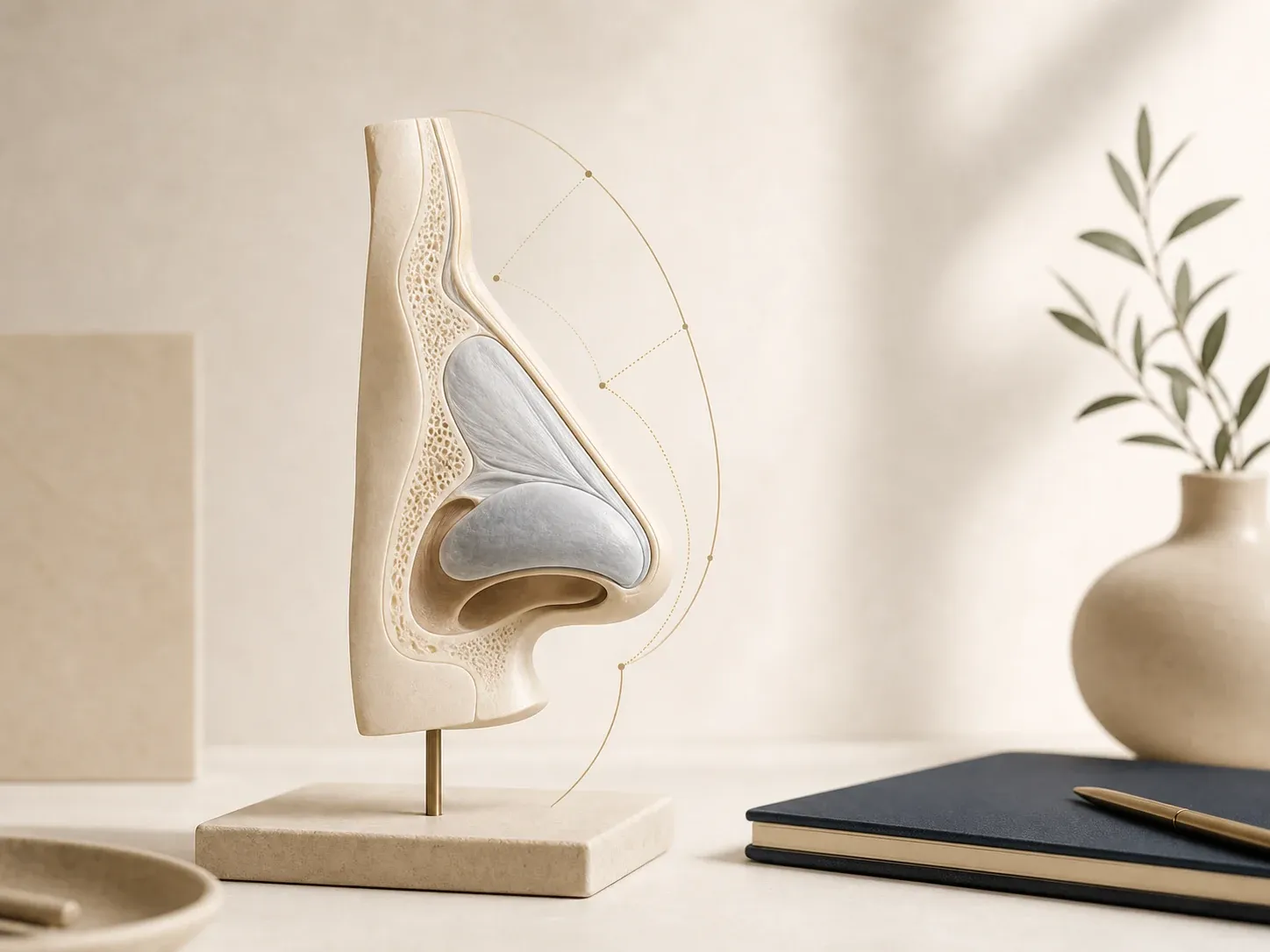
Reshaping your nose without an external incision
If you would like to refine the shape of your nose but feel hesitant about a visible scar, the closed approach may be part of the conversation. Closed rhinoplasty is performed entirely through incisions placed inside the nostrils, so the surgical access leaves no external mark across the skin between the nostrils. This page explains what the technique involves, who it may suit, what the day of surgery looks like and how recovery typically unfolds week by week.
What it is and how the technique works
In a closed, also called endonasal, rhinoplasty, every incision is hidden inside the nostrils. Working through these internal incisions, the surgeon reshapes the underlying bone and cartilage to address concerns such as a dorsal hump, a wide or drooping tip, or an irregular profile. Where appropriate, the same principles of anatomy-led planning and gentle handling of tissue apply, so that the result looks like your own nose rather than an obviously altered one.
Because the columella is not opened, the closed approach avoids the small external bridging incision used in the open technique. For suitable cases this can mean no external scar from the access and, for some people, a more contained early recovery.
An honest look at closed versus open
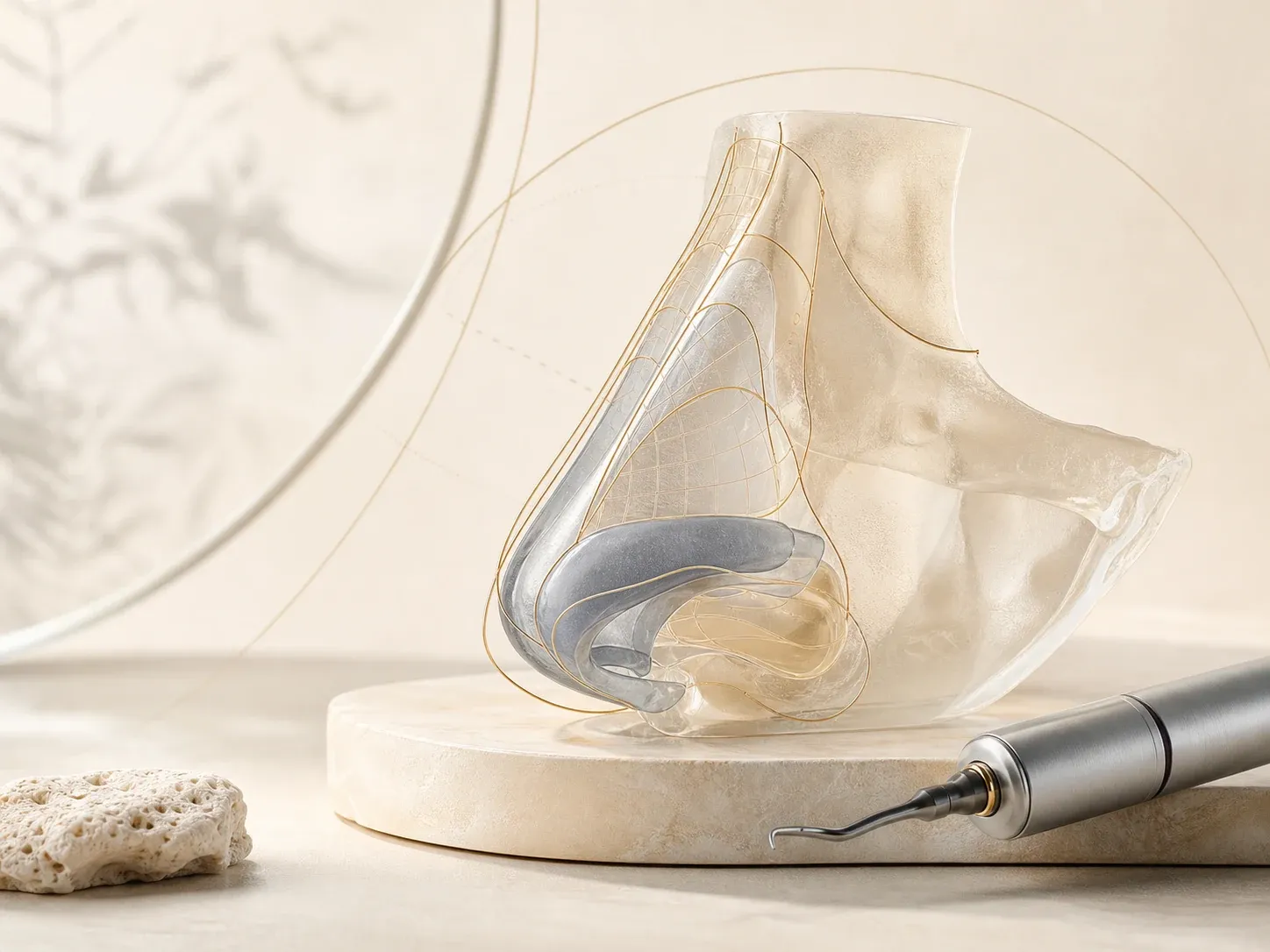
It is worth being clear about the trade-off, because neither approach is simply better. In the open technique, lifting the skin over the columella gives the surgeon the widest, most direct view of the framework, which can be an advantage for very complex reshaping or certain revision cases. The closed approach works with the structures viewed in place, through internal incisions, which avoids the external scar but offers a more limited view of the framework.
For many noses, the closed approach provides everything that is needed for a refined, natural result. For others, the broader exposure of the open technique is the safer choice. The right technique for you is the one matched to your examination and to what you would like to change, and your surgeon will talk you through that choice honestly rather than favouring one method for its own sake.
What to expect
Your journey begins with a consultation, where your nose and breathing are examined, your goals are discussed and the most suitable approach is explained in plain language. Functional concerns, such as a deviated septum that affects breathing, can sometimes be assessed and addressed during the same operation.
The procedure itself is carried out under anaesthesia, so you are comfortable throughout; your surgeon and anaesthetist will discuss the type of anaesthesia and the expected duration based on your individual plan. Afterwards, an external splint is usually applied to support the new shape, and internal supports may be used for a short time. You will be given clear written aftercare instructions covering medication, sleeping position, what to avoid and when to attend your follow-up appointments. The recovery timeline below sets out what most people can expect, while remembering that healing is individual.
The next step is simple, and there is no obligation, only clarity. A calm message over WhatsApp is enough to begin a conversation about whether the closed approach suits you.
Access plan
Closed approach planning stays anatomy-led
A closed approach uses internal access, but the decision is still based on visibility needs, anatomy and the complexity of the planned change.
- Internal access
- Incisions are placed inside the nose when this gives enough access for the plan.
- Complexity check
- Some complex or revision cases may need a different approach.
- Shared decision
- The access route is explained before surgery in plain language.
Am I a candidate?
- You would like to refine the shape of your nose without an incision across the skin between the nostrils.
- Your main concerns can be reached well from inside the nose, such as a dorsal hump or a slightly wide or drooping tip.
- You are in good general health and your facial growth is complete, typically from the late teens onward.
- You have realistic expectations and understand that the goal is a balanced, natural-looking result rather than one predetermined shape.
- You are a non-smoker, or you are willing to pause for the period your surgeon advises around the operation, as this supports healing.
- A note of caution: very complex reshaping, certain revision cases, or work needing the widest possible view of the framework may be better suited to the open approach. This is decided together at your examination, not from a photograph alone.
Recovery timeline
-
Day 1–7
An external splint and any internal supports are usually in place for about a week. Swelling and bruising around the eyes are most noticeable in the first few days and then begin to settle. Most people rest at home and keep the head elevated during this period.
-
Weeks 2–3
The splint is typically removed within the first week to ten days. Visible bruising usually fades over the second and third weeks, and many people feel comfortable returning to desk-based work and gentle daily activity.
-
Months 1–3
Early swelling continues to reduce and the nose begins to look more settled. Strenuous exercise and contact activities are reintroduced gradually, according to your surgeon's guidance.
-
Months 6–12
The finer details of the tip continue to refine as the deeper swelling resolves. The result is usually considered close to final around the one-year mark, though individual healing varies.
Questions
What is closed rhinoplasty?
How is it different from open rhinoplasty?
Will I have a visible scar?
Is closed rhinoplasty painful?
How long does the operation take?
When can I return to work and exercise?
How long will swelling last?
Can closed rhinoplasty address breathing problems?
Is everyone suitable for the closed approach?
Are there risks or complications?
Am I a suitable candidate?
Please note
Results of any surgical or interventional procedure may vary from person to person. You are advised to consult your physician for detailed information before undergoing any procedure.
If you later choose to share photos, they are optional and may be health-related personal data. Please send only clear, unedited photos you are comfortable sharing; they are handled under our privacy policy.